Showing posts with label contemporary fiction. Show all posts

Thursday, February 21, 2013

A Month with April-May, by Edyth Bulbring

Review

A terrific little YA book arrived instore yesterday. It is called A Month with April-May, and I first read it as a proof. I believe it will be a series, which is fabulous, because April-May February (real name) is a charming character with just the right amount of attitude and heart.

A Month with April-May would be perfect for readers of Jacqueline Wilson or Louise Rennison. Both the style of the writing and the characters/situations reminded me of their books. April-May is the new kid at Trinity College, admitted on a bursary and seemingly doing her best to mess it all up.

April-May is a bit offbeat, always honest and altogether quite charming. I love the snappy way this book is written and the wry observations. It is probably nothing we haven't all read before, but there was just a bit of extra dazzle about it, and the cast of secondary characters was really  enjoyable.

Recommended for early High School librarys, and teen comedy fans.


First published in Australia in 2013, by Hot Key

Friday, April 13, 2012

The Scarecrows by Robert Westall

First published in 1981

The Scarecrows was first published in 1981 – it’s more of a recent children’s classic, but rightly so, because it’s one of the best contemporary children’s novels I’ve read. I say contemporary even though The Scarecrows does have elements of horror and the supernatural – but these things arise out of the main character’s psychological trauma. The way Westall does this is seamless and powerful. Some of the content is quite daring – a few of the passages would not make the final edit these days, I feel – but at the same time, it feels like they need to be there. These things make us understand the fear, isolation and confusion Simon feels as the realities of being ‘grown up’ push their way into his life.

Simon is thirteen years old and The Scarecrows deals with how he copes in the face of his mother’s remarriage. He feels betrayed by her, and he feels she has betrayed the memory of his dead father. At boarding school he is often taken aback by fits of rage, which he describes as the devils coming in. When his mother remarries and he goes to stay with them at Mill House, the devils chase him there too, and eventually get the better of him in the climax.

What I loved about this book is the perception in it. Simon’s thoughts and feelings ring so true. Often when I come across a passage in a book that ‘just gets it’ – where the emotion and insight is just so spot on, often where it cuts into your heart – I dog-ear the page (bad, I know) so I can come back to it later and savour the perfection. There were a lot of dog-ears in this book.

Westall was so clever when he created the Simon character – I think certainly he is unlikeable, but we always understand where his actions and thoughts come from. He is never whiny or sulky or bad-tempered – he is just hurting, and we can feel this. He is quite funny and endearing, in his own way. We know he cares. We know that he knows many of his actions are wrong. But we understand why he does it. Just brilliant characterisation. I particularly loved Chapter Four, the scene with his mum in the car. It plays out so perfectly – Simon knows he is making things worse, is digging himself deeper and deeper. But he can’t, won’t, give in: when you’re hurting so much the only way to stop it is to make yourself hurt more – this just leaps off the page.

The Scarecrows is genuinely, for a kid’s book, scary. And what makes it even more terrifying is that the horror comes from the ugliness of human emotions. This is a psychological thriller at its best. Three scarecrows in a field and a decrepit mill – in Westall’s hands, these things are truly frightening. When Simon first sees the scarecrows in the field and goes to investigate – I think my eyes were bugging out of my head. Great atmosphere. Simple, but effective writing.

I also found this book to have a great balance. There is some genuinely funny stuff, like when Simon climbs up the tree to spy on Joe painting. His stubbornness itself makes me smile. There is also great emotional truth. The periphery characters are fantastic – Jane is such a little creation, and Mr Mercyful commands the pages he’s in. And the historical back story never intrudes but only enhances the main setting and story.

The Scarecrows is fantastic and a must for school libraries. It is one of the only realistic/contemporary-based children’s classics in my Top 20 list. Past entries included below:


Number 20:  Peter Pan by J. M. Barrie

Number 19:  The Neverending Story by Michael Ende

Number 18:  Tuck Everlasting by Natalie Babbitt

Number 17:  The Toymaker by Jeremy de Quidt

Number 16: The Thirteen Clocks by James Thurber

Coming soon: Watership Down, by Richard Adams

Sunday, December 18, 2011

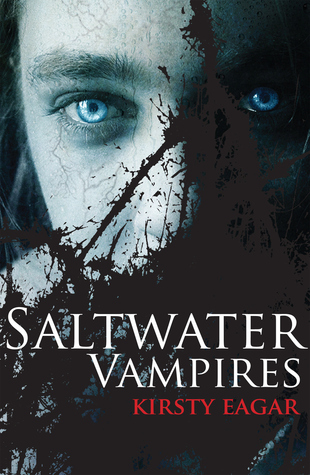
Saltwater Vampires by Kirsty Murray

First published in 2010 by Penguin


Picked up Saltwater  Vampires after falling in love with Eagar’s Raw Blue. For me, this one was not in the same league. But there were lots of things I enjoyed and appreciated about it.

Saltwater Vampires is like a weird mesh of old-world type vampires invading the very contemporary Rocky Head music-festival scene – an old-school sensibility meets a young, hip awareness complete with all the typical modern teen emotions. For me, it wasn’t quite a perfect match, and that was my main problem with the book. I appreciated it, but I didn’t really get it. I felt there was perhaps a little too much going on. The way the three distinct story overtones overlapped was all a little too complicated, with the different stories becoming distractions from the other stories to the point where I couldn’t really commit to any of them.

I liked the ‘contemporary YA’ overtone the best, and this is what I think Eagar excels at. Jamie and his gang of friends and vamp-busters are all funny and likeable and totally cool and all the rest, and their interactions are true to life and affectionately written. I liked where Eagar was taking their emotional stories, but the nature of the book – with all it’s time-jumping and shifting perspectives and what-not – means I never really got involved, like I did with Carly in Raw Blue.

This is a book all unto its own genre – it’s not a conventional vamp story, especially as we’ve come to know them from YA, and it’s not quite contemporary Aussie YA-lit. I do feel that with everything that was going on, it was more suited to an adult readership. Of course I’m all for YA pushing conventions, but I felt the plot, pacing, stories, scope, etc, would just be a better fit for ‘adult fiction’. But I did enjoy its novelty, and also the fact that these vamps were ugly and nasty – something to be scared of, disgusted by, instead of romanticised and smitten by. The whole book had a good grittiness to it.

Aussie setting is used well – the beach, the coastal town, the music festival – in a way that’s familiar but then, as Eagar works her word magic, into something strange and atmospheric and full of the unknown. Particularly the night-surfing scene and when Jamie’s bike breaks down in the national park – fantastic stuff.

I enjoyed the final big ‘showdown’ scene at the end – it provides a nice pay-off, gives the whole book a sense of urgency, and is fun to read. I found the final ‘dealing with the vamps’ (at the festival) a bit weird but that’s a minor quibble – I guess I’m just used to vamps crumbling to dust or something.

Also, a teeny bit long. Weird and wonderful and well-written but not quite perfect –kept me entertained, but just a little too much going on. 

Monday, December 12, 2011

Six Impossible Things by Fiona Wood

First published in Australia by Pan Macmillan, 2010


This was one of those 'awesome Aussie YA' books that have been on my radar for a while - aka with the likes of Graffiti Moon and Good Oil and Raw Blue - the books that have been doing well overseas and racking up all the awards and nominations.

It's cute and cool, most definitely.  Funny and awkward in the most endearing of ways.  It never quite felt 'real' to me - though, and by this I mean every problem seems to have a happy, convenient resolution,  and the emotional heart of it doesn't quite ring true.  It's very entertaining and I can't fault the writing; it's one of those books where I can't actually find anything wrong, but it just didn't quite suit my tastes. I love quirky and awkward and silly-funny, but I like there to be a little grit as well. I found Six Impossible Things to be as light and fluffy and fun as they get.

Who doesn't love Dan? He is a real cutie,  and makes 'being awkward' cool. His social ineptitude is familiar and endearing, and some of the situations he finds himself in (and inwardly reacts to) are hilarious. I particularly liked the walking across the road to avoid the awkwardness of walking so near to his crush Estelle, only having to cross back over so he can get home (she lives next door). I've done it, and numerous other predicaments he finds himself in. I really love it when an author can expose all those awkward moments we all have in such a genuine and warm-hearted way, and this book is full of them. And of course the teenage years are such rich material for this.

I didn't mind the 'crush' Estelle, but I wasn't really feeling their relationship. The cuteness of it came from Dan and his thoughts more than any meaningful interaction they had. I like relationships to be angsty in YA - I guess you can say this one kind of is, but it's all so funny  and Dan such a mooning clown that for me it sat on the 'cute' level and nothing more. Also it was all just a little too perfect - but once again, that's just a personal choice.

Cute supporting characters - the Mum annoyed me a bit. Some nice stuff with the gay Dad, if a little too forced. And Howard is as great a 'pet' character as you can get - in fact I'd almost say he was my favourite. I do love a wise, perceptive poodle.

Impossible not to like this book ... but for me, impossible to fully love it. There is also a nice, subtly done message about not wallowing in pity and just cutting the crap and taking responsibility for your own feelings and actions. Fluffy and fun. 

Friday, September 23, 2011

Friday Night Lights Wins


I know it's a bit overdue, but I just have to share my excitement over Kyle Chandler winning the 2011 Emmy for Best Actor in a Drama series. When I saw this in my news feed a few days ago, yes, I probably did give an embarrasing little fist pump.
But so well deserved - Chandler and Connie Britton as  his wife Tami were just so wonderful - they are my favourite husband and wife team on television and their relationship was portrayed beautifully. I love how Coach Taylor could be so stubborn but cared so much about his family and the team and the individuals that made it up. I love that he could be so inspiring and so moving, and I love all his little funny moments - when he snuck in a few snarky words or a look it was gold. I love Friday Night Lights and I love Coach Taylor and this win was just the perfect way to end the series.

Friday Night Lights writer Jason Katims also won for best writing.  
For all those who have not yet jumped on the Friday Night Lights hype, it will be well worth your time and emotions. It is like if you had the best, most awesome, most hilarious, most inspiring, most touching YA series that you just couldn't put down - I think I seriously watched a whole season in about two days once.

Clear eyes, full hearts, can't lose!

Monday, June 20, 2011

Forgotten by Cat Patrick

First published in 2011 by Hardie Grant Egmont


London Lane can remember the future but not the past. Her brain resets every night at 4.33am and each morning she is left to piece together her life from daily notes she leaves for herself and the gentle encouragement from her mother. Her best friend Jamie is the only other person who knows about her condition. London is doing the best she can and managing to live a fairly decent existence until two things happen: one, the very gorgeous Luke grin-dimples his ways into her life and two: she is haunted by a memory of the future that casts its shadow upon the present and London’s peace-of-mind.
Forgotten ticks all the boxes: it is cute, has a killer concept, the writing is fresh and there was a tonne of hype propelling it to ‘must-read’ lists everywhere. Things that normally bug me about this kind of book were thankfully absent (namely, really shoddily done teen romance). My face remained devoid of ‘oh god here we go again’ sniggers. But something about it just didn’t click for me. Maybe it is just because it was all a bit nice and lovely and inoffensive.
or maybe ...
Okay, I didn’t like how the book suddenly transformed into a kind of mystery whodunit in the last quarter. That felt uneven, and almost like a completely different book. And also – the epilogue. Oh my goodness. YA, please don’t. Avoid the epilogue wherever possible. This book lost half a star just from that epilogue – it wasn’t needed. It doesn’t add anything, and comes across all a bit ‘lesson learned, moral resolution, cutesy-wutesy bleh.’
Plot holes abound. Not even little ones that eat away at you, or inconsistencies, more just like a black hole of ‘ummmm?’  plot. In the back of my mind I was always going ‘but how can she’, ‘but what about’... I tried to give the cynic inside me a rest, because logic should never really get in the way of a good story, but then again I guess I really need to be swept away by the story to begin with.
London and Luke: they are cute, and I enjoyed the subtlety about their relationship, the naturalness of it and how it wasn’t, for the most part, written with over the top sentiment. But I really am sick of reading about how HOT the male love interest it. I GET it, maybe after the SECOND time it’s written. And why do they always have to be so hot anyway? Does that make the relationship more fulfilling?
Smooth prose and intriguing plot make Forgotten effortless reading. I didn’t really start to turn away from this book until the tacked on sub-plot at the end (or was it really the main plot?) There is a lot to like here and it certainly isn’t bad but I can’t say that I’ll be doing a London and remembering it into the future.

Friday, April 1, 2011

Good Oil, by Laura Buzo

First Published in 2010, by Allen & Unwin

“Miss Amelia Hayes, Welcome to The Land of Dreams, I am the staff trainer. I will call you Grasshopper and you will call me Sensei. And I will give you the good oil. Right?”


15-year-old Amelia gets her first job at Woolworths and promptly gets more than angry customers and plastic bags of fruit and veg – she also gets an all-consuming, undeniable crush on 21-year-old Chris. They talk, laugh, argue and become great friends – but the six year age gap means it will never be anything more.

What I Loved About this Book:

Much like my favourite Aussie YA of last year, Raw Blue, this is a quiet, unassuming story, quite day-to-day, devoid of big events or revelations. But it’s kind of like you can feel it crawl inside of you and curl up, and then there is a delicious warmth that slowly seeps out and lulls you further and further in and then you just never want to let that little bundle of book-love go. Good Oil is a creeper, because the emotional havoc it wreaks doesn’t feel like much when it’s happening but then there will be a moment where, Wham, you know it’s got you good.

I loved both Amelia and Chris, and using both their voices to tell the story added so much to the story. There were a few times when I thought maybe Chris’ voice slipped out of authenticity, but for the most part he was spot on and his frustration and humour and self-deprecation were completely engaging and very powerful. I’ve said it before, but I think the uni-age is an area overlooked in YA, and yet as far as material goes it is an absolute goldmine. And so I LOVED reading about his utter bewilderment at what the hell he was supposed to be doing with his life, and understanding it, and wanting him to figure it out and be happy.

I will say this is more Amelia’s story than Chris’, and she was an absolute lovely protagonist: so tough and spirited and yet completely vulnerable and unsure. All her worries – about her family and appearance and schoolwork and small but yet significant things all felt so true and accurately realised, and I loved Buzo for bringing her to life.

Good Oil made me sad, but in a good way. It made me sad because it was so easy to recognise so many of the moments – like how Chris describes taking the road trip with his uni friends; the way Amelia agonises over making that first phone call to Chris; her first experiences with underage drinking and how a moment can feel so contained and yet so much more all-encompassing than it is; Chris’ family barbecues of many a Summer evening where you’re sitting in the hot seat all night, just waiting for all the Aunts and Uncles to start with the ‘so what’s next for you’ questions and you’re crapping your pants because HELL YOU JUST DON’T KNOW. Buzo just does them so recognisably and beautifully and I wanted to go back there to relive those moments that, although you don’t know it at the time, end up defining your life.

Like I said, this is a quiet book, lonely, but there is a warmth there and a generosity of emotion. I loved the moments with Amelia and her little sis Jess, and was also quite touched by the relationship between Chris and his sister Zoe. The characters that populate the aisles and check-outs of Woolworths are weird and wonderful and bring a lot of colour and interest to the pages. And can I just say, once again it is so great to read about your own experiences as told and understood by someone else. With Raw Blue it was the waitressing/kitchen work that I could laugh at because I understood it, and having also once worked in a supermaket myself, it was a similar experience with Good Oil. I think Buzo conveyed wonderfully the little world and hierarchy the staff inhabit, although I would have loved to hear her take on some of the customers!

Fabulous read. Another winner for Aussie YA.